
Costa Rica Enrique Experimental (filter)
20,00 € s DPH
Package weight: 250g
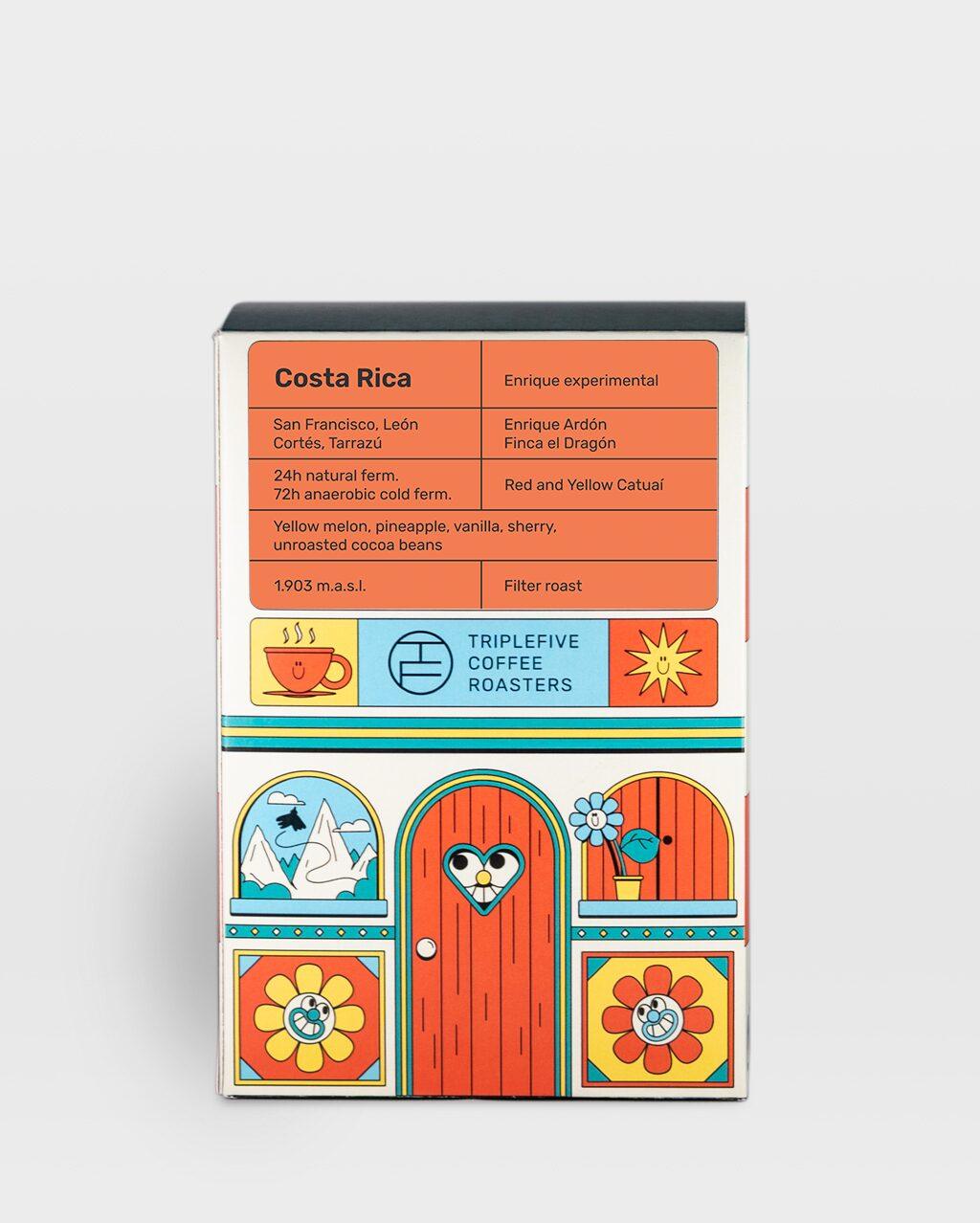
Country of origin: Costa Rica
Region: San Francisco, León Cortés, Tarrazú
Producer: Enrique Ardón, Finca el Dragón
Variety: Red and Yellow Catuaí
Process: Enrique Experimental 24h natural ferm. 72h anaerobic ferm.
Altitude: 1.903 m.a.s.l.
Taste profile: Yellow melon, pineapple, vanilla, cherry, unroasted cocoa beans
Roast: Filter
Preparation method: Kalita, Chemex, French press, V60, Aeropress
The coffee is packaged in a recyclable bag without an aluminum layer.
Description
About the product
We source our coffee from Costa Rica directly from the farmers, which means we work through a direct-trade model. This represents the ideal way of sourcing coffee: farmers receive significantly better compensation for their work, while we get the opportunity to work closely with the farm, achieve the highest possible quality, and, at the end of the day, feel good about the way we source our coffee.
Finca El Dragón is located in San Francisco, Costa Rica, at an altitude of 1,850–1,900 metres above sea level. The farm is managed by Enrique Ardón and his wife, Maricruz Jiménez. Most of the local coffee is grown in this beautiful part of Costa Rica. The high altitude has a positive impact on the coffee’s sugar content and flavour complexity. A characteristic feature of the coffee is the small size of the individual beans.
Enrique Experimental follows in the footsteps of the nanolots from this farm. Following last year’s “Forest Berries” and the previous “Cold Fermentation”, we are excited to bring you another 20 kg nanolot produced exclusively for us.
The coffee comes from Enrique’s farm, which you already know well from our selection. Enrique is a good friend of ours and our exclusive farmer — all of the coffee he exports outside Costa Rica is sent exclusively to us. This allows us to support him in experimenting with new fermentation techniques.
The coffee cherries first underwent a short 24-hour natural fermentation, followed by 72 hours of cold anaerobic fermentation. After fermentation, the coffee was washed, removing approximately 90% of the pulp. The final step was two weeks of sun-drying, followed by cleaning the beans to remove the remaining dried pulp.
We hope you enjoy Enrique’s latest experiment as much as we do.